


 Home
Home
Struggling with PCB Procurement? 5 Key Questions to Ask Before You Buy
 July 21,2026
For industrial R&D and mass production, the real challenge isn’t circuit design—it’s material selection. Choosing the wrong PCB substrate can lead to short circuits, delamination, signal integrity issues, and costly rework. In reality, PCB procurement doesn’t have to be complicated. By selecting the right manufacturer, adhering to clear standards, and paying attention to critical details, you can avoid 99% of common pitfalls. Here is a practical, actionable checklist for sourcing PCBs.
1. Substrate Material: Quality Starts with the Raw Material
The stability of a PCB is determined by its base material. Low-cost boards often use recycled or substandard materials, which may not show issues immediately but can lead to delamination, blistering, moisture absorption, and fractures during mass production.
Choose reputable brands for your substrate:
Rogers, Taconic, Arlon, ShengYi, KB are recommended brands.
For standard consumer electronics, FR-4 material is suitable.
For high-frequency and precision equipment, select high-Tg PCB or high-frequency PCB materials.
For automotive and medical devices, opt for high-temperature resistant materials .

2. Surface Finish: Don’t Overpay, But Don’t Cut Corners
Many procurement issues stem from selecting a surface finish that doesn't match the application, leading to poor solderability or reduced product lifespan .
Match the surface finish to your product application to balance cost and performance:
Surface Finish |
Best Application |
Key Advantage |
Key Disadvantage |
OSP (Organic Solderability Preservative) |
High-volume consumer electronics |
Cost-effective, flat surface, lead-free |
Short shelf life, sensitive to handling, not for PTH |
Lead-Free HASL (Hot Air Solder Leveling) |
Industrial controls, general electronics |
Good solderability, low cost, widely available |
Uneven surface, not ideal for fine-pitch components |
ENIG (Electroless Nickel Immersion Gold) |
Precision/high-frequency equipment, aerospace, medical |
Flat surface, excellent corrosion resistance, suitable for fine-pitch and BGAs |
Expensive, risk of "black pad" syndrome |
For advanced boards, verify the manufacturer's capability for via plugging, impedance control, and any special process requirements before placing your order.
3. Inspection and Testing: No Inspection Equals High Risk
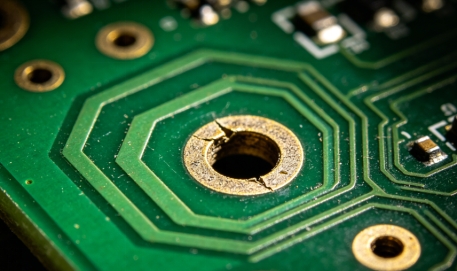
Visual inspection alone cannot detect circuit defects, barrel cracks, or impedance deviations—the primary causes of failure in low-cost PCBs.
A reputable manufacturer should have a full suite of testing procedures:
AOI (Automated Optical Inspection) for surface defects.
X-Ray Inspection for hidden flaws in vias and inner layers.
Impedance Testing for signal integrity.
RoHS Compliance Testing for environmental standards.
These quality control processes ensure reliability and consistency.
4. Certifications: The Best Guarantee of Quality
Don't choose a PCB supplier based solely on price. Industry certifications are a baseline for quality and compliance.
For mid-to-high-end, export, and government projects, look for these key certifications:
ISO 9001 – Quality Management System, ensuring consistent quality control across all production processes
ISO 14001 – Environmental Management System, demonstrating our commitment to sustainable manufacturing and regulatory compliance
IATF 16949 – Automotive Quality Management, meeting the strictest standards for defect prevention and process control
UL & CQC – Product Safety Certification for North American and Chinese markets
5. Production Capacity and Delivery: Stable Delivery is Key for Mass Production
Many projects fail not because of PCB defects, but due to unstable delivery schedules.
For mass production, a qualified manufacturer should offer:
Automated production lines for consistent quality.
Capacity for 1 to 24+ layer boards and various materials.
Support for prototyping and high-volume orders.
Flexible payment terms for long-term partnerships.
6.Conclusion
PCB procurement is a strategic process that directly impacts product reliability and project success. By focusing on these five key areas—material, surface finish, testing, certifications, and capacity—you can build a robust supply chain and avoid costly pitfalls.
7.Partner with Bicheng PCB
Looking for a reliable PCB partner? Bicheng PCB offers a full range of laminates and finished PCBs, backed by rigorous quality control and industry-certified processes. Whether you need prototypes or high-volume production, we're here to support your project from material selection to on-time delivery. Contact us to learn more.