


 Home
Home
How to Select PCB Materials Correctly? Full PCB Board Types and Selection Guide
 July 13,2026
PCB substrate determines product lifespan, stability, heat dissipation, signal integrity, and cost. Main types include FR-4 (general consumer/communication), high-Tg FR-4 (automotive/industrial, ≥150°C), metal-core (LED/power, high thermal), high-frequency PTFE/ceramic (5G/radar/satellite, low loss), flexible polyimide (wearables/foldables), and ultra-thin/halogen-free (portable/eco). Selection should prioritize Tg, Dk/Df, and thermal conductivity against actual performance requirements, not over-spec, with FR-4 as cost baseline and specialty materials significantly higher—aiming to match needs precisely, avoiding both underperformance and costly over-engineering.
1. Characteristics of All Mainstream PCB Substrates
The electronic industry mainly adopts seven classic PCB materials: paper base board, composite substrate, FR-4 glass epoxy board, high-temperature TG board, ceramic board, metal base board, and FPC flexible board. Each type differs greatly in raw material structure, electrical performance, temperature resistance, cost, and application range. The detailed features of each substrate are listed below.
1.1 Paper Base Board (Phenolic Paper Substrate)
As the most fundamental and cost-effective PCB material, phenolic paper base boards are manufactured by pressing wood fiber paper impregnated with phenolic resin under high temperature and pressure. Featuring ultra-low cost, lightweight structure, low density, and punchability, paper boards are widely used for low-end single-sided PCB production with simple manufacturing processes.
Common paper board models include XPC, FR-1, FR-2, PE-3, 94V0, and 94HB. Flame resistance varies significantly among different grades. Most paper-based models are non-flame retardant, while only the 94V0 grade provides professional flame-retardant performance. Engineers must distinguish fireproof grades strictly to eliminate potential safety hazards. Typical applications include low-cost LED power modules and small household appliance control boards.

1.2 Composite PCB Substrate (Semi-Glass Board)
Commercially known as “powder board”, composite substrates are mid-tier materials that balance reliable performance and competitive pricing. These boards adopt wood or cotton fiber paper as the core inner layer, with fiberglass cloth reinforced on both sides and bonded with flame-retardant epoxy resin. They effectively compensate for the low strength and poor flame resistance of pure paper boards, while costing far less than full fiberglass FR-4 boards.
Main product types cover 22F single-sided semi-glass boards, CEM-1, and CEM-3 double-sided semi-glass boards. Among them, CEM-1 and CEM-3 are the most widely used, supporting both single-sided and double-sided PCB fabrication. With stable insulation, improved mechanical strength, and qualified flame retardancy, composite boards are ideal for cost-sensitive mid-range consumer electronics and general industrial control boards.
1.3 FR-4 Glass Epoxy Board
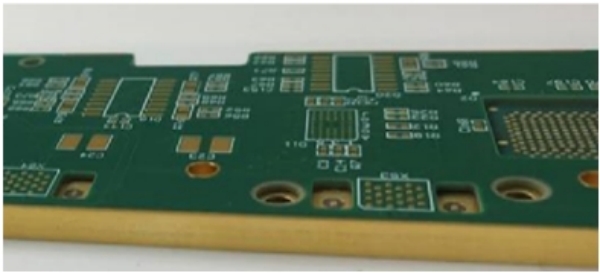
FR-4 is the most popular and dominant PCB substrate in the global market. Also called epoxy glass board, it is composed of fiberglass cloth reinforced with epoxy resin. FR-4 delivers excellent environmental adaptability, stable operating temperature, high mechanical strength, and superior insulation performance, with minimal performance changes caused by humidity and temperature fluctuations. The standard thickness of general FR-4 boards is 1.6mm, suitable for double-sided and multi-layer PCBs.
FR-4 features a dielectric constant (Dk) ranging from 3.8 to 4.7, with 4 as the industry default value — the origin of the digit “4” in FR-4. At a Dk value of 4, the signal propagation speed reaches nearly half the speed of light, fully meeting conventional high-speed circuit design requirements. Widely applied in computer peripherals, communication devices, power supplies, and industrial equipment, FR-4 is the universal choice for most civilian and industrial projects, with the only downside being a higher cost than composite substrates.
1.4 High-Temperature TG Board
The core indicator of high-temperature circuit boards is the TG value (glass transition temperature), which defines the maximum sustainable working temperature. Ordinary FR-4 boards have a TG value of approximately 130°C, only suitable for standard room-temperature environments. In contrast, high-temperature boards adopt polyimide core materials, withstanding extreme temperatures up to 300°C, along with outstanding chemical stability, aging resistance, and harsh environment adaptability.
Due to special raw materials and complex manufacturing procedures, high-temperature boards come with a high price premium. They are never used for ordinary consumer electronics, and are exclusively applied in high-end fields such as military equipment, aerospace, and high-temperature industrial devices that require extreme heat resistance and ultra-high reliability.

1.5 Ceramic Board
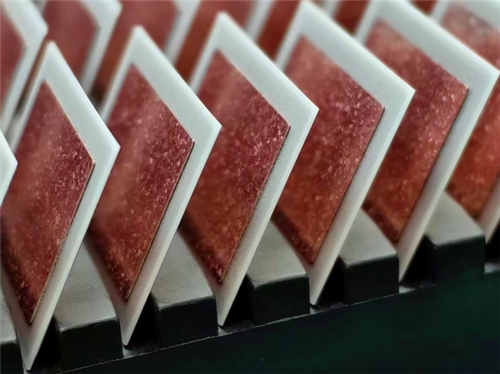
Ceramic boards are high-end special PCB substrates designed for high-frequency scenarios. Ceramic laminate PCB provide three core advantages: extreme insulation performance that eliminates current interference, excellent chemical stability without long-term performance attenuation, and ultra-low signal loss for high-frequency and high-power electrical transmission.
As professional high-frequency substrates, ceramic boards are widely adopted in high-precision and high-stability equipment, including 5G communication modules, radar core circuits, and microwave devices, ensuring efficient and accurate high-frequency signal transmission.
1.6 Metal Base Board
Metal base PCB boards are specialized for high heat dissipation, with aluminum substrates being the most common type, alongside copper and tungsten base alternatives. Structurally composed of a metal base, insulating layer, and circuit layer, the circuit is directly attached to the metal substrate, achieving far higher thermal conductivity than conventional PCB materials.
Metal boards are perfect for high-power, high-temperature, and high-density layout scenarios, such as LED lighting and display modules, power amplifiers, and high-power power circuits. However, they have structural limitations: only single-layer wiring is available, making them unsuitable for multi-layer PCB production and only applicable for simple low-wiring heat-dissipation circuits.
1.7 FPC Flexible Circuit Board
FPC flexible boards use polyimide or polyester film as the base material. Different from rigid PCBs, FPC features ultra-thin thickness, ultra-light weight, high wiring density, excellent bendability, and corrosion resistance, supporting irregular and narrow-space circuit layouts.
Widely used in smartphones, tablets, and wearable portable devices, FPC solves miniaturization, lightweight, and curved layout challenges. Different from rigid PCB manufacturing, FPC can produce odd-layer circuits. Its main limitation is low mechanical strength, making it unsuitable for high-power and high-load circuit applications.
PCB Material Quick Comparison Table
The concise table below helps you quickly compare and select PCB substrates by cost, key performance and typical use cases:
Material Type |
Core Strength |
Main Weakness |
Best Application |
Paper Base Board |
Low cost, lightweight, punchable |
Poor heat & fire resistance, low structural strength |
Low-end LED power, small home appliances |
Composite Board (CEM-1/3) |
Balanced performance & cost, better stability than paper board |
Not suitable for high-precision & high-speed circuits |
Mid-range consumer & general industrial PCB |
FR-4 Board |
High stability, durable, support multi-layer PCB |
Higher cost than composite and paper board |
Most civilian, communication & industrial devices |
High-TG Board |
Ultra high temperature resistance, anti-aging |
Extremely expensive, complex processing |
Aerospace, military, high-temperature equipment |
Ceramic Board |
Low signal loss, excellent high-frequency performance |
High cost, difficult cutting and processing |
5G, radar, microwave high-frequency circuits |
Metal Base Board |
Superior heat dissipation, high power resistance |
Only single-layer wiring supported |
LED lighting, high-power power supplies |
FPC Flexible Board |
Thin, light, highly bendable, high wiring density |
Low mechanical strength, not for high-power circuits |
Wearables, mobile & miniature electronic devices |
2. Core Principles for Scientific PCB Material Selection
Professional PCB material selection does not blindly pursue high-end specifications. The key is to balance application scenarios, performance requirements, mass production feasibility, and cost budget, avoiding performance deficiency and performance surplus while meeting electrical, mechanical, and environmental compliance standards.
2.1 Scenario-Oriented Accurate Matching
Working scenarios determine temperature resistance, heat dissipation, signal performance, and structural requirements, serving as the primary selection basis. Low-cost LED power boards and small home appliances adopt paper substrates. Mid-range single and double-sided general circuits choose CEM-1/CEM-3 composite boards. Civilian and industrial general equipment and multi-layer PCBs use standard FR-4 boards. Military and aerospace extreme high-temperature environments require high-TG boards. 5G, radar, and microwave high-frequency scenarios adopt low-loss ceramic boards. High-power heat-generating products select aluminum metal substrates, while bendable miniature portable devices apply FPC flexible boards.
2.2 Balance Performance and Cost to Avoid Waste
High-end substrates such as high-temperature boards and ceramic high-frequency boards deliver superior performance but come with much higher costs. Ordinary consumer electronics and conventional signal transmission scenarios do not require military-grade or high-frequency-specific materials. Excessively high material specifications only increase production costs without bringing practical value. Manufacturers should match material grades with product positioning to maximize cost performance for consumer, industrial, and military-grade products.
2.3 Focus on Key Technical Parameters
Designers must verify core parameters to fit design standards. In terms of temperature resistance, distinguish standard 130°C FR-4 boards and 300°C ultra-high-temperature boards based on TG values. For high-frequency circuits, focus on dielectric constant (Dk) and dielectric loss (Df) to prevent signal attenuation. Structurally, select FR-4 for multi-layer boards, metal substrates for single-layer heat-dissipation circuits, and FPC for bendable layouts. For high-speed circuits above GHz, standard FR-4 suffers obvious dielectric loss, requiring professional high-frequency materials and pre-production simulation verification.
2.4 Ensure Mass Producibility and Supply Stability
Most high-frequency and special PCB materials have long procurement cycles of 2 to 3 months with unstable inventory, while only a few conventional high-frequency boards are in stock. Designers must communicate with manufacturers in advance to confirm supply cycles and mass production feasibility to avoid project delays. Meanwhile, verify material performance including multi-lamination stability, heat resistance, CAF resistance, mechanical toughness, and flame retardant grade to ensure reliable batch production.
2.5 Comply with Industry Environmental Compliance Standards
All selected PCB materials must conform to global environmental regulations, including RoHS and halogen-free standards, meeting market access requirements of different countries and regions to avoid sales restrictions caused by non-compliant materials.
3. Industry Summary and Development Trends
PCB substrate choice dictates product quality and competitiveness. Standard civilian/industrial uses—paper, composite, or FR-4 boards—suffice, while extreme conditions call for high-temp, ceramic, metal-core, or flexible PCBs. As electronics trend toward high frequency, miniaturization, high power, and heat resistance, new materials like modified LCP and composite thermal substrates keep emerging. Smart selection ultimately balances performance, reliability, manufacturability, cost, and regulatory compliance to find the optimal fit for each design.