


 Home
-
Newly shipped PCBs
-
High Thermal Conductivity Double-Sided Aluminum Core PCB >2 W/mK MCPCB for Power Electronics
Home
-
Newly shipped PCBs
-
High Thermal Conductivity Double-Sided Aluminum Core PCB >2 W/mK MCPCB for Power Electronics
High Thermal Conductivity Double-Sided Aluminum Core PCB >2 W/mK MCPCB for Power Electronics
Printed Circuit Boards are custom-made products; the images and specifications provided are for reference only.
1. Product Spotlight: Double-Sided Aluminum Core PCB
This technical overview details a specialized printed circuit board designed for applications where thermal management and circuit density are equally critical. This circuit board utilizes a Double-Sided Aluminum Core structure, which allows for component placement and routing on both sides while maintaining a direct thermal path away from heat-generating components.
The key specifications of this board are outlined in the table below.
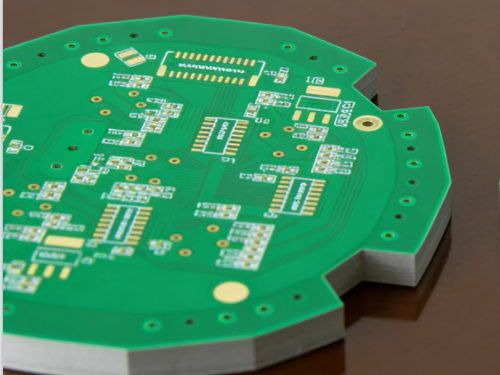
The key specifications of this board are outlined in the table below.
Specification |
Details |
Board Type |
Double-Sided Aluminum Core PCB |
Core Material |
Aluminum Core |
Thermal Conductivity |
> 2.0 W/mK |
Finished Board Thickness |
1.65 mm (+/- 10%) |
Copper Layer Thickness |
1 oz (Base Copper) |
Surface Finish |
ENIG (Electroless Nickel Immersion Gold), 2u" Gold Thickness |
Solder Mask |
Green, Both Sides |
Panel Size |
68 mm x 54 mm per unit |
2. Understanding Metal Core Circuit Boards (MCPCBs)
2.1 What is a Metal Core Circuit Board?
A Metal Core Printed Circuit Board (MCPCB), also known as a thermal PCB or metal-backed PCB, is a type of circuit board that incorporates a metal material as the base for the heat-sinking portion of the board. Unlike standard FR4 PCBs, which rely on fiberglass for structural support and are poor thermal conductors, MCPCBs are engineered to quickly transfer heat from critical components to the chassis or a heat sink.
This is achieved through a unique layered structure comprising the Circuit Layer, which consists of copper foil that carries the electrical signal and is etched to form the circuit pattern, typically thicker than in standard PCBs to handle higher currents. The Dielectric Insulation Layer is the most critical layer, made of thermally conductive but electrically insulating materials such as prepreg or polyimide that bond the circuit layer to the metal core, with its high thermal conductivity efficiently transferring heat while preventing electrical shorts. The Metal Base Layer, typically aluminum or copper, provides mechanical strength and acts as the primary heat spreader, drawing heat away from the circuit layer and dissipating it.
A typical example is this 2-layer metal core PCB, which features a 2.0mm overall thickness (typical) and provides >2000V AC electrical isolation. The board is constructed with 2oz copper on each layer and a thermally conductive dielectric (1 W/mK) bonded to an aluminum base.
3. Comparative Analysis: Double-Sided Aluminum Core vs. Double-Sided Single-Side Aluminum
When designing for higher density or specific thermal requirements, it is essential to distinguish between different types of metal-based boards. Below is a comparison of a true Double-Sided Aluminum Core board versus a Double-Sided board with a single-side aluminum base.
Feature |
Double-Sided Aluminum Core |
Double-Sided Single-Side Aluminum |
Structure |
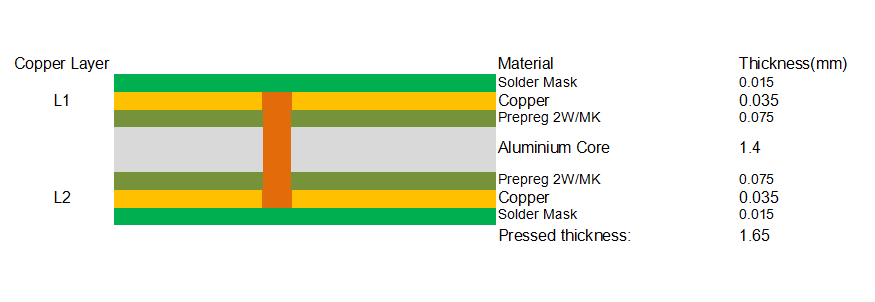
Aluminum core in the middle, with an insulating layer and copper foil on both sides. |
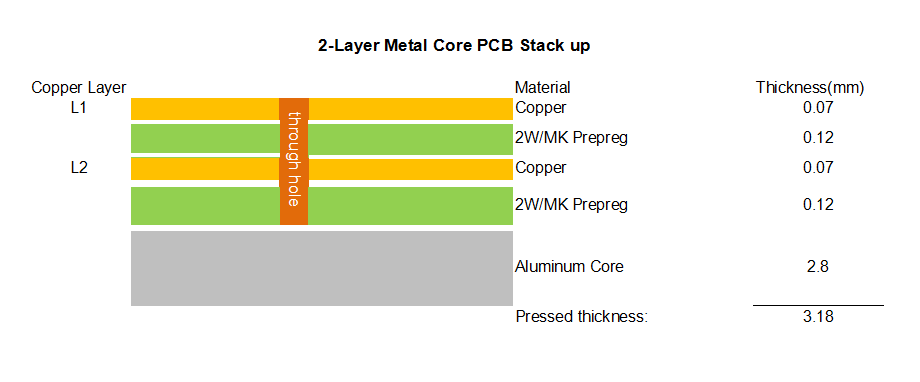
Aluminum layer only on one side of the board; the other side is typically FR-4 or another material. |
Visual Metaphor |
A sandwich where the aluminum is the filling in the middle, and the two copper layers are the bread. |
A single-sided aluminum board that has been stacked to create a second layer. |
Thermal Path |
Heat from components on either side conducts through the thin dielectric layer and into the central aluminum core, which spreads and dissipates the heat. |
Only components placed directly over the aluminum side benefit from efficient heat transfer. The other side does not have a direct path to the metal. |
Design Capability |
Allows for complex circuits and component placement on both sides of the board, effectively doubling the available real estate while maintaining excellent thermal performance. |
Components can be placed on both sides, but the side opposite the aluminum will have poor heat dissipation, limiting its use for power components. |
Typical Application |
High-power supplies, motor controllers, and DC-DC converters where space is limited, and components generate heat on both sides. |
Cost-sensitive designs where high heat is localized primarily on one side of the board. |
Double-Sided Aluminum Core
Double-Sided Single-Side Aluminum
4. Conclusion
For engineers and purchasers seeking a robust solution for high-reliability power electronics, 2-layer Aluminum Core PCB offers a significant advantage with its high thermal conductivity core greater than 2 W/mK for superior heat dissipation, standard 1.65mm thickness suitable for various enclosure designs, double 1oz copper layers supporting higher current capacity, and durable 2u" ENIG surface finish ensuring excellent solderability and corrosion resistance. 1.65mm Aluminum Core PCB board configuration provides an ideal platform for designs requiring efficient thermal management and dense circuit integration on both sides, ensuring long-term performance and reliability in demanding environments.
Founded in 2003, Shenzhen Bicheng Electronics Technology Co., Ltd is an established high frequency PCB supplier and exporter in Shenzhen, China, serving customers worldwide.
We are devoted to delivering high-frequency PCB products and solutions of the highest quality, along with customized service. Get in touch with us to start your project !
Visit https://www.bicheng-enterprise.com to learn more.