


 Home
-
Newly shipped PCBs
-
2-Layer 1.6mm Rogers Kappa 438 PCB Low Loss laminate for 5G and IoT Applications
Home
-
Newly shipped PCBs
-
2-Layer 1.6mm Rogers Kappa 438 PCB Low Loss laminate for 5G and IoT Applications
2-Layer 1.6mm Rogers Kappa 438 PCB Low Loss laminate for 5G and IoT Applications
Printed Circuit Boards are custom-made products; the images and specifications provided are for reference only.
1. Rogers Kappa 438 PCB Introduction
Rogers Kappa 438 PCB utilizes a glass-reinforced hydrocarbon ceramic system that delivers superior high-frequency performance while maintaining cost-effective fabrication capabilities. This low-loss material can be processed using standard epoxy/glass (FR-4) manufacturing methods, offering seamless integration into existing production lines. Kappa 438 laminates feature UL 94 V-0 flame retardant certification and lead-free solder compatibility, with a dielectric constant specifically tailored to match FR-4 industry standards for easy migration of existing designs requiring enhanced electrical performance.
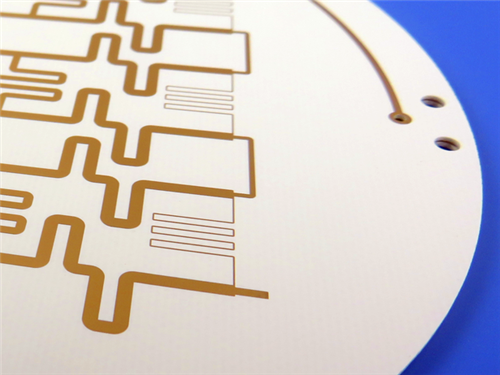
2. PCB Construction Details
Specification Category |
Details |
Base Material |
Rogers Kappa 438 |
Layer Count |
2 Layers |
Board Dimensions |
53mm x 36mm (±0.15mm) |
Finished Thickness |
1.6mm |
Copper Weight |
1 oz Outer Layers |
Min. Trace/Space |
4/4 mils |
Min. Hole Size |
0.3mm |
Blind Vias |
None |
Surface Finish |
ENIG |
Solder Mask |
None |
Silkscreen |
Black (Top), None (Bottom) |
Electrical Test |
100% |
3. Stackup Structure
This 2-layer configuration employs a Rogers Kappa 438 core with 1.524mm (60mil) thickness, positioned between two 35μm copper layers to create a standard 1.6mm profile optimized for reliable RF performance and manufacturing efficiency.
4. Board Statistics
Components: 10
Total Pads: 34 (22 Thru-Hole, 12 Top SMT)
Vias: 27
Nets: 2
Files: Gerber RS-274-X
Standard: IPC-Class-2
Availability: Worldwide
5. Kappa 438 Material Features
Dielectric Constant: 4.38 (FR-4 Compatible)
Thermal Coefficient of Dk: -21 ppm/°C
Z-Axis CTE: 42 ppm/°C
Glass Transition Temperature: >280°C
Flammability: UL 94-V0
Tighter Dk and Thickness Tolerance vs Standard FR-4
6. Kappa 438 Key Benefits
Seamless integration with FR-4 manufacturing processes
Easy conversion of existing FR-4 designs for better performance
Consistent and reliable circuit performance
Enhanced design flexibility with improved PTH reliability
Full compatibility with automated assembly processes
Cost-effective high-frequency solution
7. Typical Applications
Carrier Grade WiFi and LAA Systems
Small Cell and DAS Infrastructure
V2X Communication Systems
IoT Smart Home Devices
Wireless Metering Systems
5G Network Equipment