


 Home
Home
How to Choose the Right PCB Surface Finish?
 September 26,2025
In PCB manufacturing, copper traces oxidize when exposed to air. Surface finishes protect exposed copper by preventing oxidation and ensuring solderability and electrical reliability.
Finishes are classified by the intermetallic compound (IMC) formed during soldering:
Ni/Sn IMC types (e.g., ENIG, ENEPIG)
Cu/Sn IMC types (e.g., OSP, Immersion Silver, Immersion Tin)
The choice of surface finish significantly affects PCB performance, cost, and application suitability. Below is an overview of common PCB surface finish processes.
1.Hot Air Solder Leveling (HASL)
One of the oldest and most widely used processes, HASL involves submerging the PCB into a bath of molten solder (lead-based or lead-free) and then using hot air knives to blow off the excess, leaving a uniform coating.
Advantages: It is the lowest-cost option and offers excellent solderability with a proven track record.
Disadvantages: The resulting surface can be uneven, making it unsuitable for modern, high-density components like fine-pitch BGAs. The thermal shock of the process can also be a concern for some substrates.
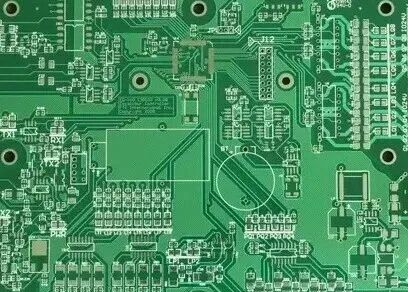
HASL PCB
2.Organic Solderability Preservative (OSP)
OSP is an eco-friendly process that deposits a thin, transparent organic layer onto the copper surface to prevent oxidation.
Advantages: It provides a very flat surface, ideal for high-density designs, at a low cost. It is also a simple process.
Disadvantages: The coating is delicate and has a limited shelf life. It requires careful handling and assembly processes, as it can be easily contaminated. The coating is also transparent, making inspection difficult.
3.Electroless Nickel Immersion Gold (ENIG)
This popular finish involves first plating a layer of nickel as a barrier and solderable surface, followed by a thin layer of gold that protects the nickel from oxidation.
Advantages: ENIG offers a flat surface, excellent stability for long-term storage, and is ideal for lead-free soldering. It is also suitable for contact surfaces like gold fingers.
Disadvantages: It is more expensive than HASL or OSP. Process control is critical, as defects like "black pad" can occur, leading to solder joint failures.
4. Immersion Silver (Imm-Ag)
A finish that positions itself between OSP and ENIG in terms of cost and performance. A thin layer of silver is deposited onto the copper through a chemical displacement reaction.
Advantages: It provides a flat surface, good solderability, and is a cost-effective choice for many applications.
Disadvantages: Silver is prone to tarnishing (sulfidation) if not stored properly and can be susceptible to creep corrosion in harsh, sulfur-rich environments.
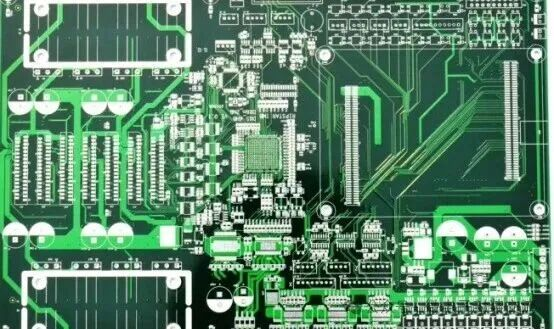
Immersion Silver PCB
5. Immersion Tin (Imm-Sn)
This process deposits a thin layer of tin, which forms a copper-tin intermetallic compound, providing a highly solderable surface.
Advantages: It offers outstanding solderability due to its tin-based composition and a very flat surface.
Disadvantages: It has a short shelf life and carries a potential risk of tin whisker growth, which must be mitigated through specific process controls.
6.Electrolytic Nickel/Gold (Hard Gold)
This is an electrolytic plating process that deposits a thick, durable layer of nickel followed by a thick layer of hard gold, often containing cobalt for increased wear resistance.
Advantages: It is extremely wear-resistant and provides stable, low-resistance electrical contacts, making it ideal for connector points.
Disadvantages: It is the most expensive finish and is generally applied only to specific areas (selective plating). The thick gold layer makes it unsuitable for soldering due to the risk of "gold embrittlement."
7.Electroless Nickel Electroless Palladium Immersion Gold (ENEPIG)
ENEPIG is considered the premium "universal" finish. It adds a layer of palladium between the nickel and gold layers of the ENIG process.
Advantages: The palladium layer virtually eliminates the "black pad" risk and provides a superior surface for both soldering and delicate gold or aluminum wire bonding. It offers the highest reliability.
Disadvantages: It is the highest-cost option due to the use of palladium.
Surface Treatment & Application Scenarios
Process |
Cost |
Solderability |
Flatness |
Main Applicable Products |
Hot Air Solder Leveling (HASL) |
Low |
High |
Poor |
General PCBs |
Organic Solderability Preservative (OSP) |
Low |
Medium |
High |
Consumer Electronics |
Electroless Nickel / Immersion Gold (ENIG) |
High |
High |
High |
High-end Communication |
Immersion Silver |
Medium |
High |
High |
High-density PCBs |
Immersion Tin |
Medium |
High |
High |
Storage-related PCBs |
Electrolytic Nickel/Gold |
High |
Medium |
High |
Gold Fingers (Hard Gold), High-reliability Products (Soft Gold) |
Electroless Nickel Electroless Palladium Immersion Gold (ENEPIG) |
High |
High |
High |
BGA Packaging, High-reliability Products |
8.Summary
Selecting the optimal PCB surface finish is a critical decision that balances performance, reliability, and cost. Understanding the strengths and limitations of each process ensures your electronic products are built for success.