
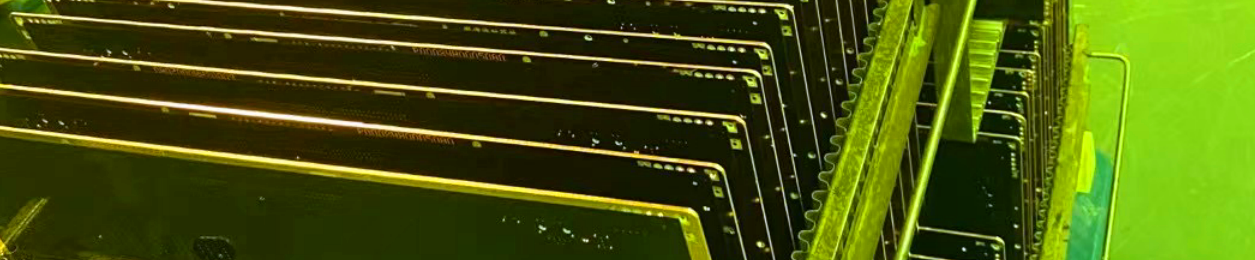
Rogers AD300D PCB Raw Materials Introduction Rogers Corporation’s AD Series™ antenna materials are high-performance specialty solutions engineered and manufactured to meet the rigorous demands of today’s wireless antenna markets—with the capability to address evolving design needs now and into the future. As a standout member of this product line, Rogers AD300D high frequency laminates are ceramic-filled, glass-reinforced PTFE-based materials that deliver a low and tightly controlled dielectric constant, setting a benchmark for reliable high-frequency performance. Like all AD Series antenna products, Rogers AD300D Laminate is built on a glass-reinforced PTFE foundation, a composition that ensures not only controlled dielectric properties and low loss performance, but also exceptional passive intermodulation (PIM) performance—critical for minimizing signal interference in wireless communication systems. The woven glass reinforcement further enhances circuit processability, enabling high-yield PCB fabrication that streamlines manufacturing workflows and reduces production costs. Rogers AD300D PCB substrate benefits from the AD Series’ core advantages, including flexible dielectric constant options tailored to meet the diverse requirements of modern antenna designs. What sets it apart is its array of industry-leading technical features that elevate its performance for high-demand antenna applications: Features Low loss tangent of .0021 at 10 GHz Well controlled Dk of 2.94+/-0.05 Good thermal conductivity of 0.37 W/m-K at 100°C Low PIM of -159dBC at 30mils Larger Panel Sizes Available Benefits Wide range of application use Improved power handling Low loss, higher antenna efficiency Maintains mechanical form during handling AD300D Laminate Properties AD300D Laminate Dielectric Constant, @10GHZ (2.5 GHz) Typical (Process) 2.97, 3.03 +/-0.05 Dielectric Constant, @10GHZ (2.5 GHz) Typical (Design) 2.94, 3.03 Dissipation Factor TAN @10 GHz (2.5 GHz) (Typical) 0.0021 Thermal Coefficient εr -50°C to 150°C ppm/°C (Typical) -73 Volume Resistivity Mohm (Typical) 1.7x10⁸ Surface Resistivity Mohm (Typical) 5.1x10⁷ Water Absorption D48/50% (Typical) 0.04 Thermal Conductivity W/m/°K (Typical) 50°C ASTM D5470 0.37 Coefficient of Thermal Expansion -55° to 288°C ppm/°C (Typical) X 24 Coefficient of Thermal Expansion -55° to 288°C ppm/°C (Typical) Y 23 Coefficient of Thermal Expansion -55° to 288°C ppm/°C (Typical) Z 98 Peel Strength 1 oz (35um) ED Foil lbs/in. (N/mm) (Typical) 18.3 (3.2) Density gm/cm3 (Typical) 2.23 Flammability Rating UL94 V-0 Lead-Free Process Compatible Y PIM dBc Typical -159 A Piece of AD300 Laminate The image below shows a Rogers AD300D laminates. Rogers AD300D high frequency laminates are widely used in: Cellular infrastructure base station antennas, Automotive telematics antenna systems, and Commercial satellite radio antennas. Conclusion Rogers AD300D high frequency PCB materials deliver low loss, improved power handling and higher antenna efficiency, while maintaining mechanical stability during processing. With its broad applicability, it is the ideal choice for cellular base station antennas, automotive telematics antennas and commercial satellite radio antennas.
.jpg)


 Home
Home