
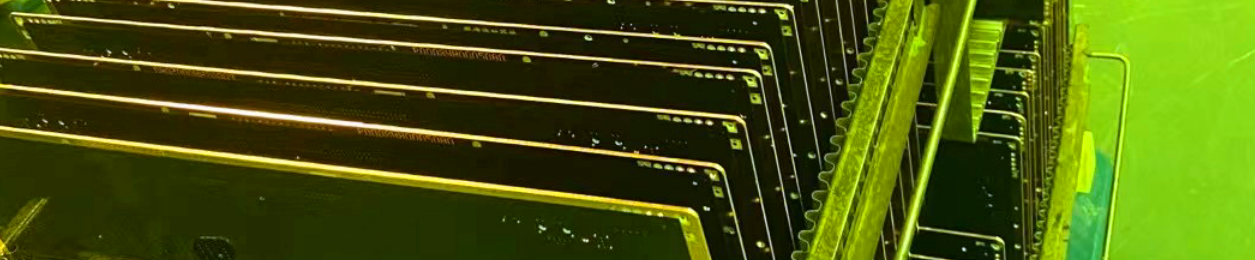
Rogers TMM4 PCB Raw Materials Introduction Hi Guys. Welcome back to our channel. Today, We’re going to talk about a type of high frequency thermoset microwave material---Rogers TMM 4 laminate. Rogers TMM 4 is a ceramic, hydrocarbon, thermoset polymer composite designed for stripline and microstrip applications. Rogers TMM 4 PCB substrate has strong mechanical and chemical properties combined many of the benefits of both ceramic and traditional PTFE materials. It is based on thermoset resins which allows for reliable wire-bonding without pad lifting or substrate deformation. TMM4 Typical Properties Rogers TMM4 copper clad laminate boasts an impressive range of properties that make it an ideal choice for demanding applications. Let's take a closer look at some of its key features. First, we have the Dielectric Constant of TMM4. With a process value of 4.5±0.045 at 10 GHz, it ensures reliable signal transmission. The Dielectric Constant in the design phase is 4.7, covering a broad frequency range from 8 GHz to 40 GHz. Moving on to Dissipation Factor, TMM4 shines with a process value of 0.002 at 10 GHz, indicating low signal loss and enhanced performance. Rogers TMM4 high frequency circuit material also exhibits excellent thermal stability, with a Thermal Coefficient of dielectric constant of +15 ppm/°K over a wide temperature range from -55°C to 125°C. When it comes to electrical properties, TMM4 impresses with an Insulation Resistance exceeding 2000 Gohm, ensuring reliable insulation performance. The Volume Resistivity measures an impressive 6 x 10^8 Mohm.cm, while the Surface Resistivity stands at 1 x 10^9 Mohm. Let's talk about the thermal properties of TMM4. It exhibits a Decomposition Temperature (Td) of 425°C, ensuring its stability and reliability even at high temperatures. The Coefficient of Thermal Expansion of TMM4 is also worth noting. Along the X axis, it measures 16 ppm/K, along the Y axis, it measures 16 ppm/K, and along the Z axis, it measures 21 ppm/K. This means that TMM4 can withstand temperature variations from 0°C to 140°C without significant dimensional changes. Additionally, TMM4 laminate showcases a Thermal Conductivity of 0.7 W/m/K at 80°C, allowing for efficient heat dissipation in electronic systems. Moving on to its mechanical characteristics, TMM4 showcases remarkable strength. The Copper Peel Strength after Thermal Stress reaches an impressive 5.7 lb/inch (1.0 N/mm) for both X and Y directions, even after solder float with 1 oz. EDC. TMM4's Flexural Strength stands at 15.91 kpsi in both the MD (Machine Direction) and CMD (Cross-Machine Direction), ensuring structural integrity in demanding conditions. The Flexural Modulus for MD and CMD is 1.76 Mpsi, indicating excellent stiffness. TMM4 also exhibits desirable physical properties. Its Moisture Absorption is minimal, with only 0.07% for a 2X2 area at 1.27mm (0.050") thickness and 0.18% at 3.18mm (0.125") thickness. The Specific Gravity of TMM4 is 2.07, providing a lightweight solution without compromising performance. Additionally, its Specific Heat Capacity is 0.83 J/g/K, contributing to efficient thermal management. Last but not least, TMM4 is Lead-Free Process Compatible, ensuring compliance with industry standards and environmental regulations. Property TMM4 Direction Units Condition Test Method Dielectric Constant,εProcess 4.5±0.045 Z 10 GHz IPC-TM-650 2.5.5.5 Dielectric Constant,εDesign 4.7 - - 8GHz to 40 GHz Differential Phase Length Method Dissipation Factor (process) 0.002 Z - 10 GHz IPC-TM-650 2.5.5.5 Thermal Coefficient of dielectric constant +15 - ppm/°K -55℃-125℃ IPC-TM-650 2.5.5.5 Insulation Resistance >2000 - Gohm C/96/60/95 ASTM D257 Volume Resistivity 6 x 10⁸ - Mohm.cm - ASTM D257 Surface Resistivity 1 x 10⁹ - Mohm - ASTM D257 Electrical Strength(dielectric strength) 371 Z V/mil - IPC-TM-650 method 2.5.6.2 Thermal Properties Decompositioin Temperature(Td) 425 425 ℃TGA - ASTM D3850 Coefficient of Thermal Expansion - X 16 X ppm/K 0 to 140 ℃ ASTM E 831 IPC-TM-650, 2.4.41 Coefficient of Thermal Expansion - Y 16 Y ppm/K 0 to 140 ℃ ASTM E 831 IPC-TM-650, 2.4.41 Coefficient of Thermal Expansion - Z 21 Z ppm/K 0 to 140 ℃ ASTM E 831 IPC-TM-650, 2.4.41 Thermal Conductivity 0.7 Z W/m/K 80 ℃ ASTM C518 Mechanical Properties Copper Peel Strength after Thermal Stress 5.7 (1.0) X,Y lb/inch (N/mm) after solder float 1 oz. EDC IPC-TM-650 Method 2.4.8 Flexural Strength (MD/CMD) 15.91 X,Y kpsi A ASTM D790 Flexural Modulus (MD/CMD) 1.76 X,Y Mpsi A ASTM D790 Physical Properties Moisture Absorption (2X2) 1.27mm (0.050") 0.07 - % D/24/23 ASTM D570 3.18mm (0.125") 0.18 Specific Gravity 2.07 - - A ASTM D792 Specific Heat Capacity 0.83 - J/g/K A Calculated Lead-Free Process Compatible YES - - - - A Piece of TMM4 Laminate On the screen is a TMM4 PCB substrate. Rogers TMM 4 high frequency laminates are typically used in power amplifiers and combiners, filters and couplers, satellite communication systems, GPS antennas, dielectric polarizers and lenses etc. Conclusion Rogers TMM 4 laminate’s mechanical properties resist creep and cold flow. It is resistant to process chemicals, reducing damage during fabrication. All common PCB manufacturing processes can be used with TMM 4 materials, so the volume mass production is available for marketing. OK. This concludes today’s episode. Thank you for reading. See you next time.
.jpg)


 Home
Home