
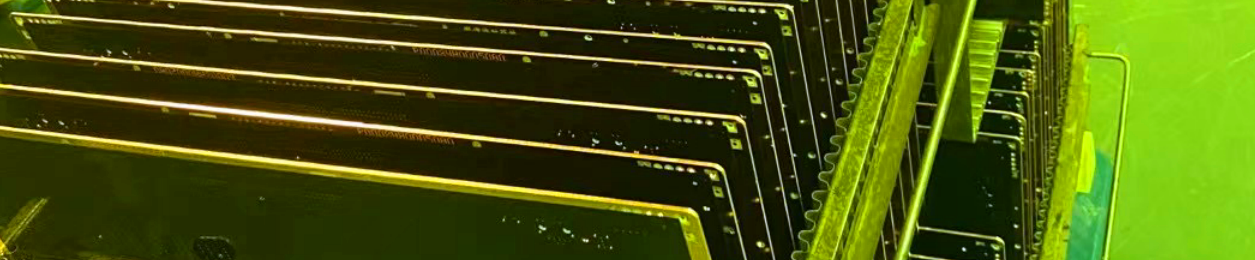
Rogers TC600 Microwave PCB Material Introduction Hello, and welcome back to our channel. Today, we will be discussing Rogers TC600 microwave laminate, which is a type of enhanced thermal conductivity PCB material. Rogers TC600 laminate is woven fiberglass reinforced, ceramic filled, PTFE-based composite which is designed to provide enhanced heat-transfer through “Best-In-Class” thermal conductivity, while reducing dielectric loss and insertion loss. The increased thermal conductivity provides several benefits, including higher power handling, improved device reliability, and reduced hot spots. Let's take a closer to learn the properties of TC600 PCB material, which include its electrical, thermal, mechanical, and physical properties. TC600 Typical Properties Firstly, the dielectric constant of TC600 laminate is 6.15 at 1.8 MHz when tested using the resonant cavity method. Additionally, when tested using IPC TM-650 at 10 GHz, the dielectric constant is also 6.15 as well. The dissipation factor is 0.0017 at 1.8 GHz and 0.002 at 10 GHz when tested using IPC TM-650. The absolute value of temperature coefficient of dielectric constant (TCDk) is 75 ppm/ºC, which indicates that the dielectric constant of TC600 remains stable over a wide range of temperatures. In terms of electrical properties, Rogers TC600 has good volume resistivity and surface resistivity, with an electrical strength of 850 Volts/mil or 34 Kv/mm. The dielectric breakdown is 62 kilovolts, and the arc resistance is greater than 240 seconds. When it comes to thermal properties, there are three parameters to consider: Td, time-to-delamination, and CTE. The decomposition temperature of TC600 is greater than 512 °C, and the T260, T288, and T300 values are all greater than 60 minutes. RogersTC600 laminate also has a low Z-Direction CTE, which provides unsurpassed plated through hole reliability. The mechanical properties of TC600 are reflected in a peel strength of 10 lb/in, a Young's modulus of 280 kpsi, a flexural strength of 9.6 kpsi, and a tensile strength of 5.0 kpsi. In terms of physical properties, TC600 has extremely low water absorption of 0.02%, with a density of 2.9 g/cm³ and a high thermal conductivity of 1.1 W/mK in Z direction. The specific heat capacity is 0.94 J/gK, and it has a 94V0 flammability rating. The outgassing property of total mass loss is as low as 0.02%. Property Unit Value Test Method 1. Electrical Properties Dielectric Constant (may vary by thickness) @1.8 MHz - 6.15 Resonant Cavity @10 GHz - 6.15 IPC TM-650 2.5.5.5 Dissipation Factor @1.8 GHz - 0.0017 Resonant Cavity @10 GHz - 0.002 IPC TM-650 2.5.5.5 Temperature Coefficient of Dielectric Constant: TCεr @ 10 GHz (-40-150°C) ppm/ºC -75 IPC TM-650 2.5.5.5 Volume Resistivity C96/35/90 MΩ-cm 1.6x10⁹ IPC TM-650 2.5.17.1 E24/125 MΩ-cm 2.4x10⁸ IPC TM-650 2.5.17.1 Surface Resistivity C96/35/90 MΩ 3.1x10⁹ IPC TM-650 2.5.17.1 E24/125 MΩ 9.0x10⁸ IPC TM-650 2.5.17.1 Electrical Strength Volts/mil (kV/mm) 850 (34) IPC TM-650 2.5.6.2 Dielectric Breakdown kV 62 IPC TM-650 2.5.6 Arc Resistance sec >240 IPC TM-650 2.5.1 2. Thermal Properties Decomposition Temperature (Td) Initial °C 512 IPC TM-650 2.4.24.6 5% °C 572 IPC TM-650 2.4.24.6 T260 min >60 IPC TM-650 2.4.24.1 T288 min >60 IPC TM-650 2.4.24.1 T300 min >60 IPC TM-650 2.4.24.1 Thermal Expansion, CTE (x,y) 50-150ºC ppm/ºC 9, 9 IPC TM-650 2.4.41 Thermal Expansion, CTE (z) 50-150ºC ppm/ºC 35 IPC TM-650 2.4.24 % z-axis Expansion (50-260ºC) % 1.5 IPC TM-650 2.4.24 3. Mechanical Properties Peel Strength to Copper (1 oz/35 micron) After Thermal Stress lb/in (N/mm) 10 (1.8) IPC TM-650 2.4.8 At Elevated Temperatures (150ºC) lb/in (N/mm) 10 (1.8) IPC TM-650 2.4.8.2 After Process Solutions lb/in (N/mm) 9 (1.6) IPC TM-650 2.4.8 Young’s Modulus kpsi (MPa) 280 (1930) IPC TM-650 2.4.18.3 Flexural Strength (Machine/Cross) kpsi (MPa) 9.60/9.30 (66/64) IPC TM-650 2.4.4 Tensile Strength (Machine/Cross) kpsi (MPa) 5.0/4.30 (34/30) IPC TM-650 2.4.18.3 Compressive Modulus kpsi (MPa) ASTM D-3410 Poisson’s Ratio - ASTM D-3039 4. Physical Properties Water Absorption % 0.02 IPC TM-650 2.6.2.1 Density, ambient 23ºC g/cm3 2.9 ASTM D792 Method A Thermal Conductivity (z-axis) W/mK 1.1 ASTM E1461 Thermal Conductivity (x, y) W/mK 1.4 ASTM E1461 Specific Heat J/gK 0.94 ASTM E1461 Flammability class V0 UL-94 NASA Outgassing, 125ºC, ≤10-6?torr Total Mass Loss % 0.02 NASA SP-R-0022A Collected Volatiles % 0 NASA SP-R-0022A Water Vapor Recovered % 0 NASA SP-R-0022A A Piece of TC600 Laminate Displayed on the screen is a TC600 microwave laminate. Rogers TC600 high frequency circuit materials are ideally suited for a variety of applications, including power amplifiers, filters and couplers, microwave combiners and power dividers, small footprint antennas, digital audio broadcasting (DAB) antennas, and GPS and hand-held RFID reader antennas, among others. Conclusion When it comes to high power RF signal applications, TC600 PCB raw materials are designed to deliver improved thermal management. Rogers TC600 high frequency laminates are characterized by a unique combination of features that include high thermal conductivity, low loss tangent, low coefficient of thermal expansion (CTE), and world-class temperature phase stability. As a result, TC600 PCB substrates enable enhanced performance and reliability in high power applications. In addition to power amplifiers and other high power designs, TC600 laminates are an excellent option for passive components such as couplers and filters that require critical higher power capabilities and are sensitive to dielectric constant changes with temperature. Thank you for reading today's episode. We hope this information was helpful, and we look forward to seeing you again next time.
.jpg)


 Home
Home